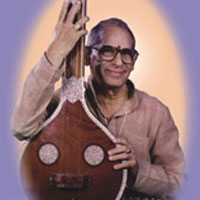
Nedunuri Krishnamurthy (10 October 1927 – 8 December 2014) was a legendary Indian Carnatic vocalist, musicologist, educator, and one of the most venerated music scholars of modern times. Awarded the prestigious Sangeetha Kalanidhi by the Madras Music Academy in 1991, he was an astute musician whose melody remains unchallenged and who never compromised on the rigid grammar of classical music while singing with technical elegance that evoked the right emotion in listeners. His contributions to Carnatic music, particularly his work with Annamacharya compositions, have left an indelible mark on the classical music landscape.
Early Life and Family Background
Krishnamurthy was born on 10 October 1927 at Kothapalli, Pithapuram Taluka, East Godavari district, in what was then British India, to Rama Murthy Panthulu and Vijayalakshmi. His father held a minor job at the estate of the Raja of Pithapuram. He was profoundly influenced by his mother, who sang Ashtapadis, Tarangas, and the Adhyatma Ramayana kritis. Her musical influence during his formative years played a crucial role in shaping his future as a musician.
Musical Training and Early Development
In 1940, at the age of 13, Krishnamurthy joined the Maharaja's Music College at Vizianagaram, where he received initial training in both violin and vocal music from the renowned Dwaram Narasinga Rao Naidu. This foundational training provided him with a comprehensive understanding of both instrumental and vocal aspects of Carnatic music. In 1949, he came under the profound influence of the legendary Carnatic vocalist Dr. Sripada Pinakapani, under whose guidance he developed his distinctive style of music.
Academic and Administrative Career
Krishnamurthy had a distinguished career in music education, serving as Principal of several prestigious institutions:
- S.V. College of Music and Dance, Tirupati
- M.R. Government College of Music and Dance, Vizianagaram
- Government College of Music and Dance, Secunderabad
- G.V.R Government College of Music and Dance, Vijayawada - where he retired in 1985
He also served as Dean of Faculty of Fine Arts and Chairman of Board of Studies in Music at both Sri Venkateswara University and Nagarjuna University, contributing significantly to the academic framework of music education.
Monumental Contribution to Annamacharya Project
One of Krishnamurthy's most significant contributions was to the Annamacharya Project of the Tirumala Tirupati Devasthanams (TTD). He was instrumental in tuning most of the Annamacharya kritis as we know them today, setting to tune 108 compositions of the 15th-century saint-composer from Andhra Pradesh. This monumental work has preserved and popularized the devotional compositions of Annamacharya for contemporary audiences and future generations.
Performance Style and Musical Characteristics
Nedunuri's performances were characterized by strict adherence to tradition, and his alapanas were renowned for capturing the essence of important Carnatic ragas. His style combined the art and science of music in a robust measure, with imaginative exploration of ragas laden with succinct and succulent gamakas forming the hallmark of his rendition. He firmly believed that music ought to be learned through direct interaction in the Guru-Sishya mode, emphasizing the importance of traditional teaching methods.
Notable Musical Partnerships
Krishnamurthy formed a popular and much-admired partnership with the renowned violinist Lalgudi Jayaraman. The performances of this duo are celebrated by listeners and critics alike for their perfect synchronization and musical understanding. This collaboration represents one of the finest examples of vocal-violin partnerships in Carnatic music history.
Awards and Recognition
His exceptional contributions to Carnatic music were recognized with numerous prestigious honors:
- Sangeetha Kalanidhi (1991) - The highest honor from the Madras Music Academy
- Sangeetha Choodamani (1976) - Conferred by Krishna Gana Sabha, Madras
- Asthana Vidwan - Tirumala Tirupati Devasthanams
- Asthana Vidwan - Sri Kanchi Kamakoti Peetham
Teaching Philosophy and Legacy
As an educator and guru, Krishnamurthy was known for his uncompromising approach to classical music grammar while maintaining the emotional depth that makes music meaningful. He trained numerous students who have gone on to become accomplished musicians themselves. His teaching emphasized technical precision combined with emotional expression, ensuring that students understood both the science and art of Carnatic music.
Scholarly Contributions
Beyond performance and teaching, Krishnamurthy was a respected musicologist who contributed to the theoretical understanding of Carnatic music. His scholarly approach to music education and his work in curriculum development at various universities helped establish academic standards for music education in South India.
Cultural and Spiritual Impact
His work with devotional music, particularly the Annamacharya compositions, had a profound spiritual and cultural impact. By making these ancient compositions accessible to contemporary audiences through his musical settings, he helped preserve an important aspect of South Indian devotional tradition and ensured its continuity for future generations.
National Stature and Recognition
Krishnamurthy was one of the few vocalists from Andhra Pradesh who attained national stature in Carnatic music. His performances provided rich listening experiences and were characterized by their adherence to classical principles while remaining emotionally engaging. He was recognized as an outstanding exponent of Carnatic music, a musicologist, guru, and tunesmith.
Final Years and Passing
Nedunuri Krishnamurthy passed away on 8 December 2014 at Visakhapatnam, aged 87, while undergoing treatment for lung cancer. His death marked the end of an era in Carnatic music, as the field lost one of its most respected and accomplished practitioners.
Enduring Legacy
Nedunuri Krishnamurthy's legacy continues through his students, his contributions to the Annamacharya repertoire, and his influence on Carnatic music education. His uncompromising approach to classical tradition, combined with his ability to make ancient compositions relevant to contemporary audiences, serves as a model for future generations of musicians. His work ensures that the rich heritage of Carnatic music, particularly the devotional compositions of Annamacharya, continues to inspire and elevate listeners worldwide. Through his performances, teaching, and scholarly contributions, he exemplified the highest ideals of the musician-scholar tradition in Indian classical music.